





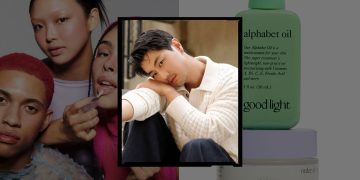




In the summer of 1997, my sister, my mother, and I locked arms as we walked through Seoul’s Dongdaemun market. We looked like any other Korean family—except my sister and I gave it away with our American swagger in our Tommy Hilfiger zip-ups and Jansport backpacks, pinching our nostrils like clothespins. “What’s that smell?” we whispered, trying not to laugh.
I tugged my mother’s sleeve. “Moyah?” The word for “what’s that” slipped out in my American-accented Korean. It was my first trip to the motherland, and everything felt foreign and frenzied yet weirdly familiar. Even the specific Seoul smell felt like a memory I’d inherited.
“Shh … they’ll know we’re from America and think we’re rich,” my mom warned, scanning for bargains. We passed silk scarves, pastel hanboks, bubbling ddeokbokki, then stopped at a stall overflowing with beauty products. Tiny tinctures, glass bottles, round jars from ISA KNOX, IOPE, Sulwhasoo. It felt like discovering a secret world. Skin care meant just for us.
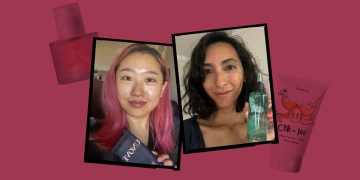
Three decades later, that secret arrived on American shores like a tsunami—sheet masks, snail mucin, toner pads, pimple patches lining every retail shelf. Korean culture wasn’t just mine anymore. It belonged to the world. But these feel-good moments weren’t enough. After years of fighting to keep it alive, my brand Good Light Cosmetics is sunsetting in April.
Like many founders before me, the decision was agonizing. What’s ironic is that I started this business to promote Korean culture. But it was Korean culture’s fierce competition—and America’s insatiable hyper-consuming beauty economy—that pushed me to let it go.
My fascination with beauty started at home, watching my immigrant parents treat grooming like armor. My father’s meticulous routine. My mother’s intentional rituals. The potions and lotions lined up like tiny soldiers ready for war. In a cruel world that isn’t always kind toward immigrants, those five minutes alone to breathe were self-preservation.
I studied journalism because I wanted people like my immigrant parents to be seen. Growing up watching Suchin Pak on MTV, I understood how powerful representation could be—the shock of seeing someone who looked like me being loud and visible in a world that rarely made space for us. After college I moved to New York and worked for $12 an hour at an entertainment magazine that paid for my room and board. It felt glamorous and precarious all at once, but when I finally landed a full-time job, I made it my mission to tell stories editors thought wouldn’t sell. Stories about Asian American actors, Korean pop culture (before K-pop was global), early celebrations of Asian Pacific Islander Heritage Month, editorial shoots where future cast of Crazy Rich Asians met for the first time. I wanted to widen the frame so kids like me could see themselves inside it.
In 2014, everything shifted when I wrote a story about eleven transgender teens styled by Nicola Formichetti; it went viral, earned GLAAD and Webby nominations, and pushed me to start my own online magazine, Very Good Light. We launched with stories on Sikh American men and the beauty of turbans, Arab American teens navigating an anti-Muslim administration, and nonbinary and trans people claiming space—beauty as dignity, identity, survival. The publication was a love letter to my younger self, a kid desperate to be seen, and it eventually led to my first book deal for Pretty Boys, a history of masculine-identifying people and their relationship to beauty and power.
In 2018, while living in Los Angeles, a man who I met at a meeting with a sunscreen brand reached out on LinkedIn. He was looking for his next venture and remembered how much I wanted to put my advocacy into a beauty brand. He wanted to get into business together and create a physical product. I agreed and the next few months saw us begging friends and family, taking meetings with venture capitalists, and scrounging enough to create three products.