









Don’t attack me, but I didn’t know what hemorrhoids were until last year, during my third trimester of pregnancy. I quickly became well acquainted with the condition—swollen veins in the anus and lower rectum—thanks to the pressure from my growing uterus and baby. By two months postpartum, I was scraping the bottom of my last tub of hemorrhoid cream, certain I’d never have to see (or say) the word again. I was wrong.
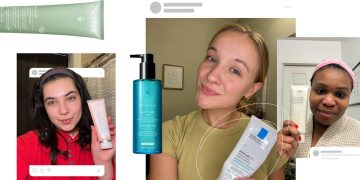
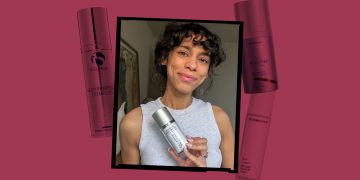
Lately, my TikTok For You page has been flooded with women slathering hemorrhoid cream everywhere except where it was intended—most notably under their eyes and across fine lines—claiming it can tighten skin and smooth wrinkles. It’s not the first time people have come on the app talking about butt paste, either. Back in 2022, we’d reported people using the stuff to tackle under-eye puffiness. While there is some logic behind those claims, dermatologists say the reality is far more complicated.
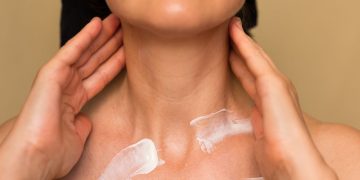
The trend is migrating south, from the under-eye area to the neck. One comment on a TikTok video of a woman using a generic brand hemorrhoid cream reads, “I was a derm nurse, and my 83-year-old dermatologist always recommended this to his patients when asked if there are non-surgical options for turkey neck.” “I’m just gonna use it as an overall body lotion at this point,” another user writes.
So what exactly is giving people the impression that this is some sort of miracle cream? “Many [hemorrhoid creams] contain vasoconstrictors like phenylephrine, which temporarily shrink blood vessels,” says Mona Gohara, MD, a board-certified dermatologist in New York City. “That fleeting tightening effect can look like improvement on the skin.”
In other words, the smoothing effect is real—but it’s short-lived. “It’s a cosmetic sleight of hand,” she adds. “There’s no true skin change.”
While it may be tempting to treat hemorrhoid cream as a multitasking fix, modern dermatologists advise against it. “The risks outweigh the benefits,” says Dr. Gohara. “The formulas in hemorrhoid creams can be irritating, disrupt the skin barrier, and over time may even thin the skin, especially if they contain topical steroids, which some hemorrhoid products do.”
That last point is especially important. According to Dr. Gohara, skin laxity and sagging are driven by collagen loss, elastin breakdown, sun damage, muscle banding, and overall structural changes in the skin—not just surface-level swelling. Temporarily constricting blood vessels won’t address any of that. In fact, repeatedly irritating delicate areas like the neck could potentially worsen crepey texture over time.
Ellen Marmur, MD, a board-certified dermatologist in New York City, also warns that, in addition to phenylephrine, some hemorrhoid creams may contain hydrocortisone—an ingredient that should absolutely not go on your face. “Hydrocortisone can be absorbed through the skin into the bloodstream to cause systemic side effects in other parts of your body,” De Anne Harris Collier, MD, a Florida-based board-certified dermatologist, previously told Allure.”Because hydrocortisone is a steroid, usage over time can affect your adrenal glands, which are responsible for your body’s response to stress.” Dr. Collier adds.
There are safer, more effective ways to address your skin concerns. For neck tightening and sagging, try neck firming creams with retinol; for puffy undereyes, try peptide eye creams; for fine lines and wrinkles, try creams with hyaluronic acid, ceramides, and retinol.
The promise of temporary tightening may be tempting, but for real results—and healthier skin—dermatologist-backed options are the smarter investment. So, leave the hemorrhoid cream behind.
Read more skin care stories: